Pardon Our Progress
Night School 2026

Still from Al Basateen, featured in Night School’s film program organized by Hind Mezaina.
December 21, 2025
The theme for Night School’s fifth season at Art Jameel, Pardon Our Progress, took shape when we approached historian Frauke Heard-Bey to join us. When I began searching for sources on Dubai’s history in the mid-2000s, her book was the first I encountered, From Trucial States to United Arab Emirates. It was among the most accessible histories available, not just because it could be found at Dubai International Airport, which at the time had the city’s best bookshop. Published in 1982 with several later editions, the book remains essential.
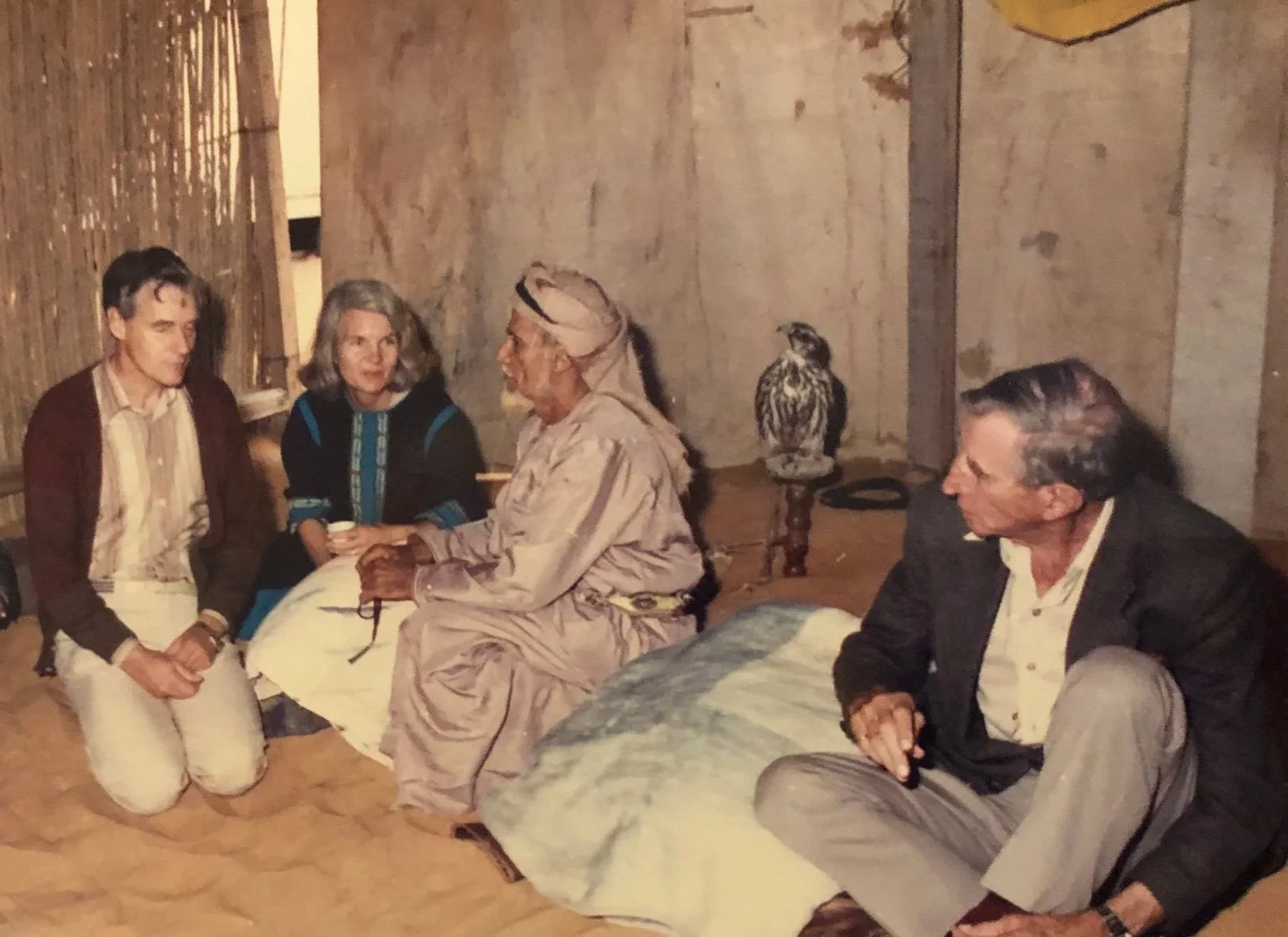
David Heard and Frauke Heard-Bey sit with Musallim bin Al Kamam, centre, former travel companion to Wilfred Thesiger, on right, during the latter’s storied traversals of the Rub al Khali.
Having arrived in Abu Dhabi in 1967 after training as a historian in Berlin, she encountered a city somehow both quiet and astir. Drawing on British archival records while weaving in material she gathered locally, Frauke established a model for critically assembling the country’s modern history. The book is far from her only achievement; she continues to devote herself to the protection and production of UAE history.
When I knocked on her door at the National Centre for Documentation and Research, I was one of many newcomers curious about the mid-2000s hype. I remember her advice because it shaped what I did next. With Frauke, it’s always the next that matters; each article or book is a step toward something larger and still in formation. At Night School, she will be in conversation with Meitha Almazrooei. I will be listening for clues about what sustains her commitment to articulating the UAE’s past. Does she constantly have to change the way she looks at UAE cities, or do they keep changing in response to her persistent examination?
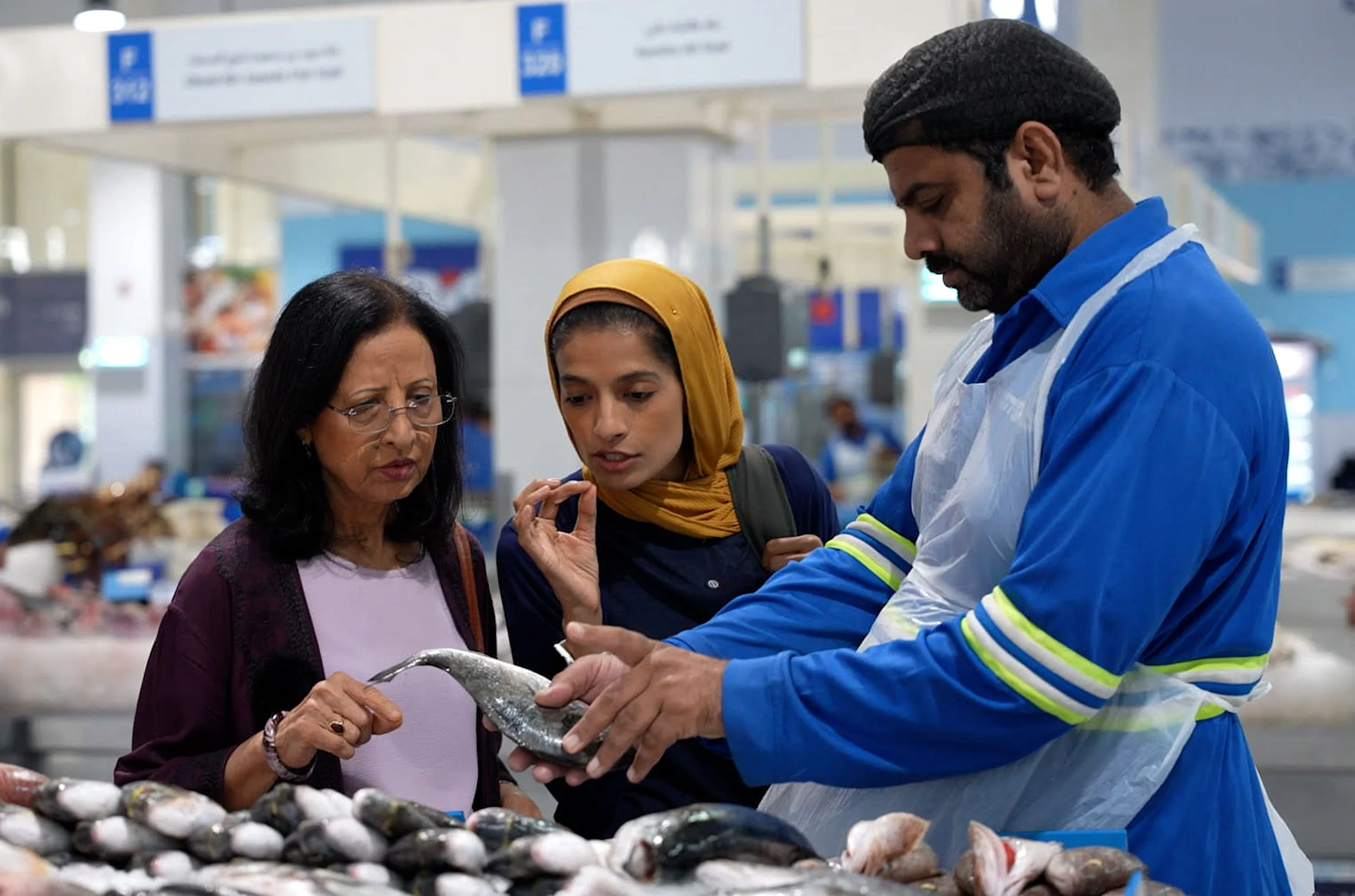
Arva S. Ahmed, center, at Deira Fish Market.
Our second guest is Arva S. Ahmed, perhaps best known for the food tour company, Frying Pan Adventures. Arva’s enterprise has brought attention to aspects of Dubai largely absent from official narratives. I met Arva through another tour company owner, Priyanka Zielinski. Arva is the first entrepreneur we’ve invited to Night School, and the company is only one of her initiatives devoted to the people who keep the city fed. A genuine curiosity about place and people competes with the bottom line in shaping her growing micro–media ecosystem, which now includes the OSN series Ditch the Silver. The term entrepreneur is often tinged by an obsession with creating something out of the ether. Arva reminds us that entre- signals the undertaking, the getting-into-the-thick-of-it.
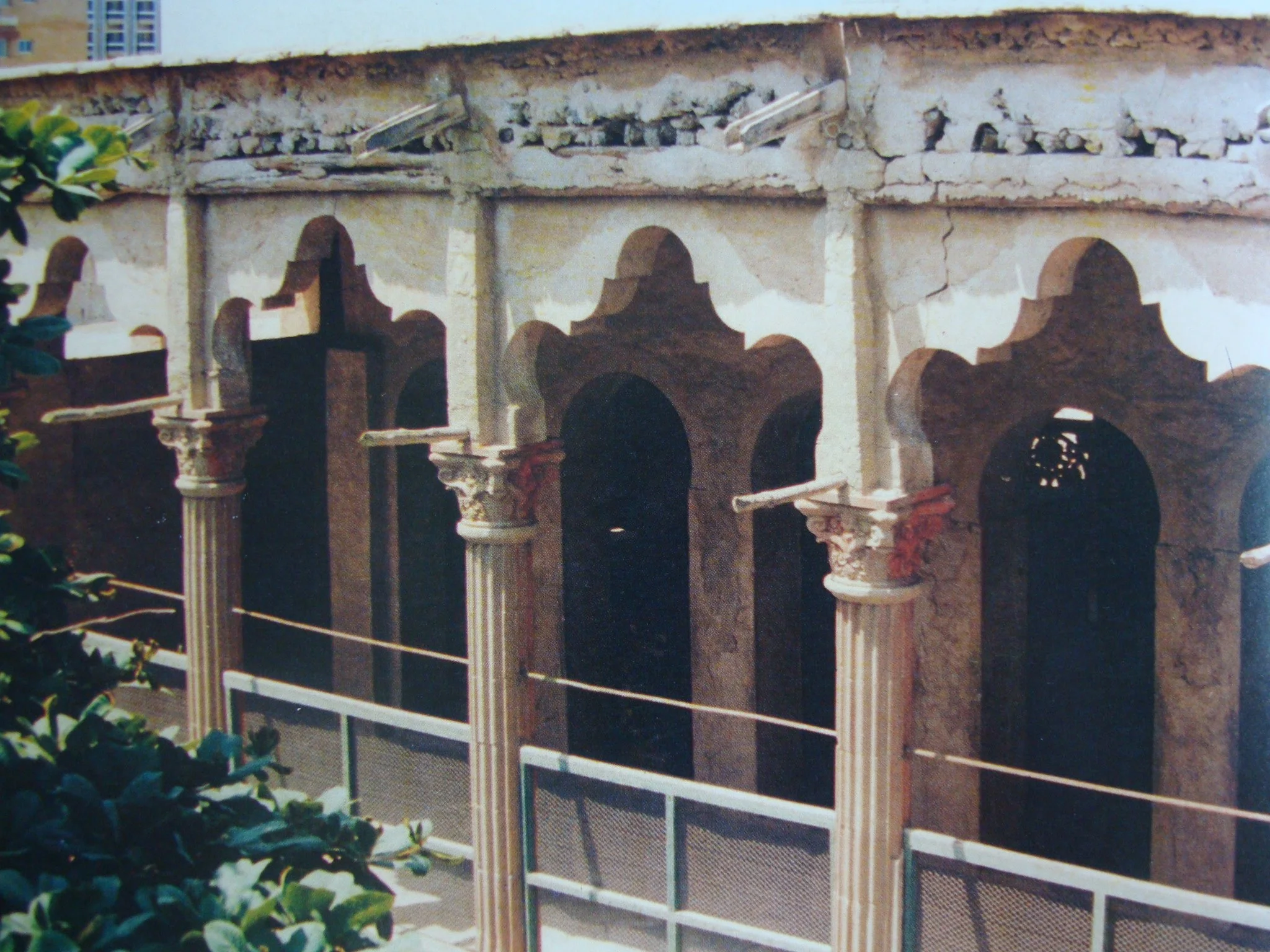
From documentation images of Bastakiya collected by Rashad Bukhash.
Next we meet with architect Rashad Bukhash. When I first sought to know more about Dubai’s architectural past, everyone told me to find Rashad. He invited me to offices in a restored house near Dubai Creek, a stone’s throw from where he grew up. As a kid in Bastakiya alleyways, he began assisting architect Peter Jackson by measuring his family home. Those drawings later appeared in Windtower, co-authored by Jackson and Anne Coles. Rashad will be in conversation with researcher Lina Najem, a past Night School participant. In his early work with Dubai Municipality’s newly formed heritage department, Rashad collaborated at first with architects who had little training in preservation. Today, architectural heritage is a specialized global industry. Rashad and Lina will review the past from the perspective of what we know now. And, just how much can we rely on architectural preservation to tell us of a city’s history?
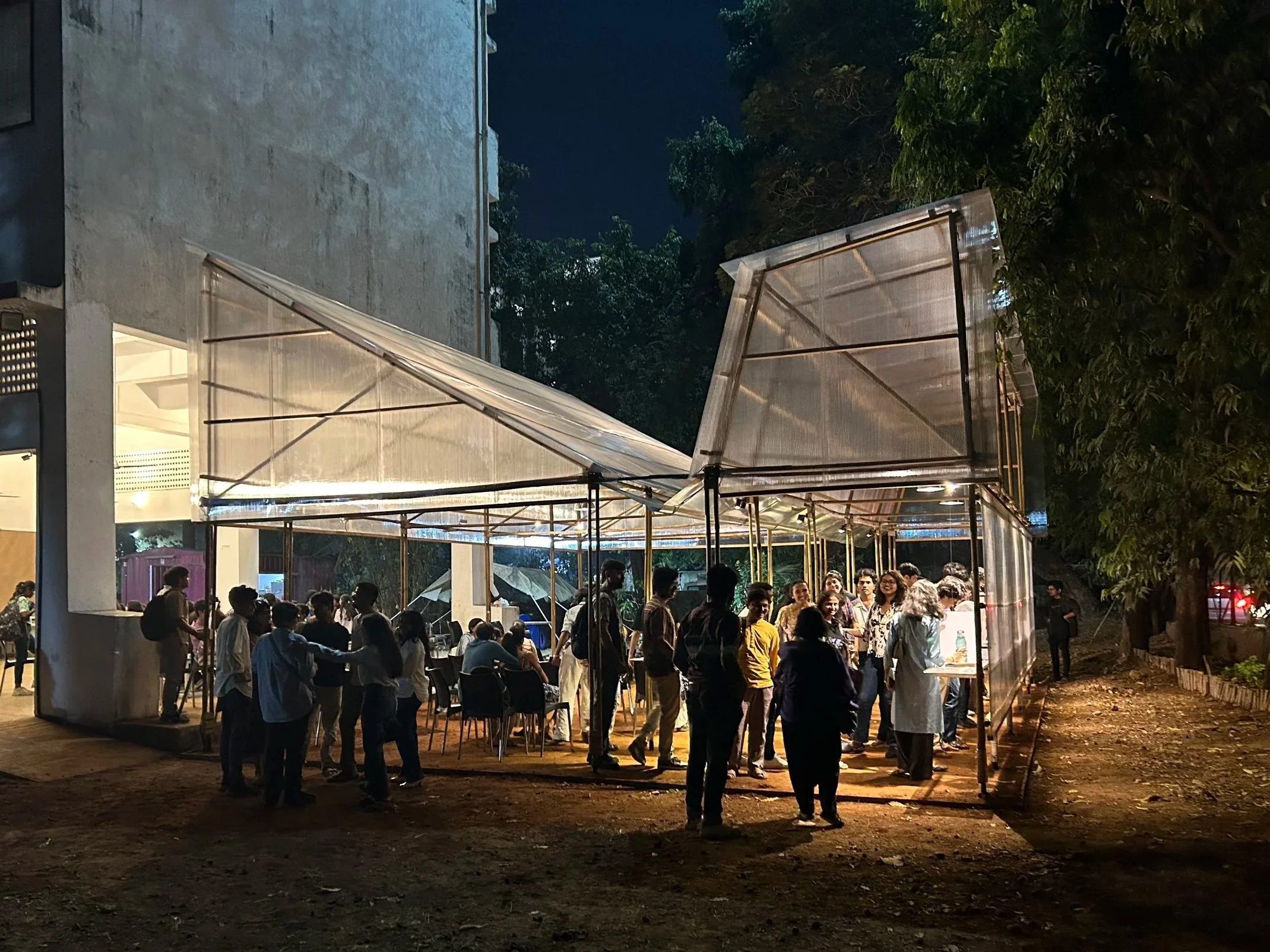
Night scene at the School of Environment & Architecture, Mumbai.
Architect Rupali Gupte and urbanist Prasad Shetty will present at our fourth event. I met them several years ago when curator Sabih Ahmed set us up to take a walk together through neighborhoods around Dubai Creek. It was midway through the walk, on an abra, that one of them casually mentioned they had started an architecture school. I wondered if I’d heard that right over the boat’s diesel engine. Indeed, they had co-founded the School of Environment & Architecture, fully accredited and now thriving in the heart of Mumbai. This evening will focus on how they, with a group a friends, doubled down on this huge commitment. Beyond just a school, they have also sought what they call “soft forms,” models for an institution to keep standing even when you constantly call it into question
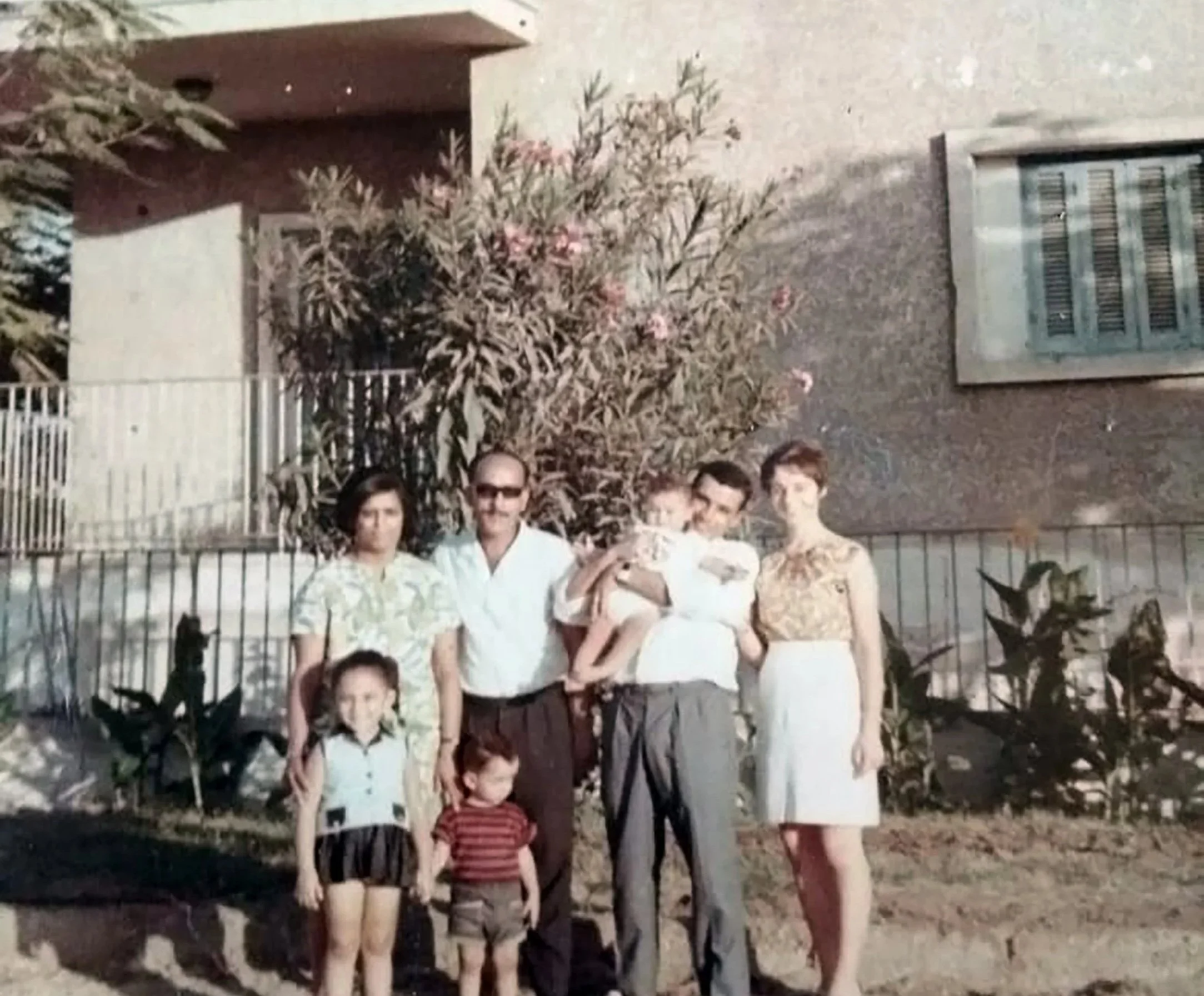
Family snapshot in front of early building in Mohandiseen, Cairo, 1960s.
We will then hear from architect and author Khaled Adham, one of the first architects I befriended in the Gulf. His decades of writing on Gulf cities have been marked by his careful approach, perhaps shaped by the fact that such cities as Doha, Kuwait, and Al Ain were not just subjects of study but also homes. Khaled will present recent work on his hometown, Cairo. For several years, he has focused on Mohandiseen, once a suburb, now a central urban district within the megacity. Its historical role in housing Egypt’s middle class reveals connections to Cairo’s latest zones of expansion. Even as his attention returns to Cairo, Khaled’s analysis traces the influence of Gulf urbanization in the city, not only today but also sixty years earlier. Where his perspective on the Gulf was once shaped by Egypt, his recent work suggests that the reverse is also true.
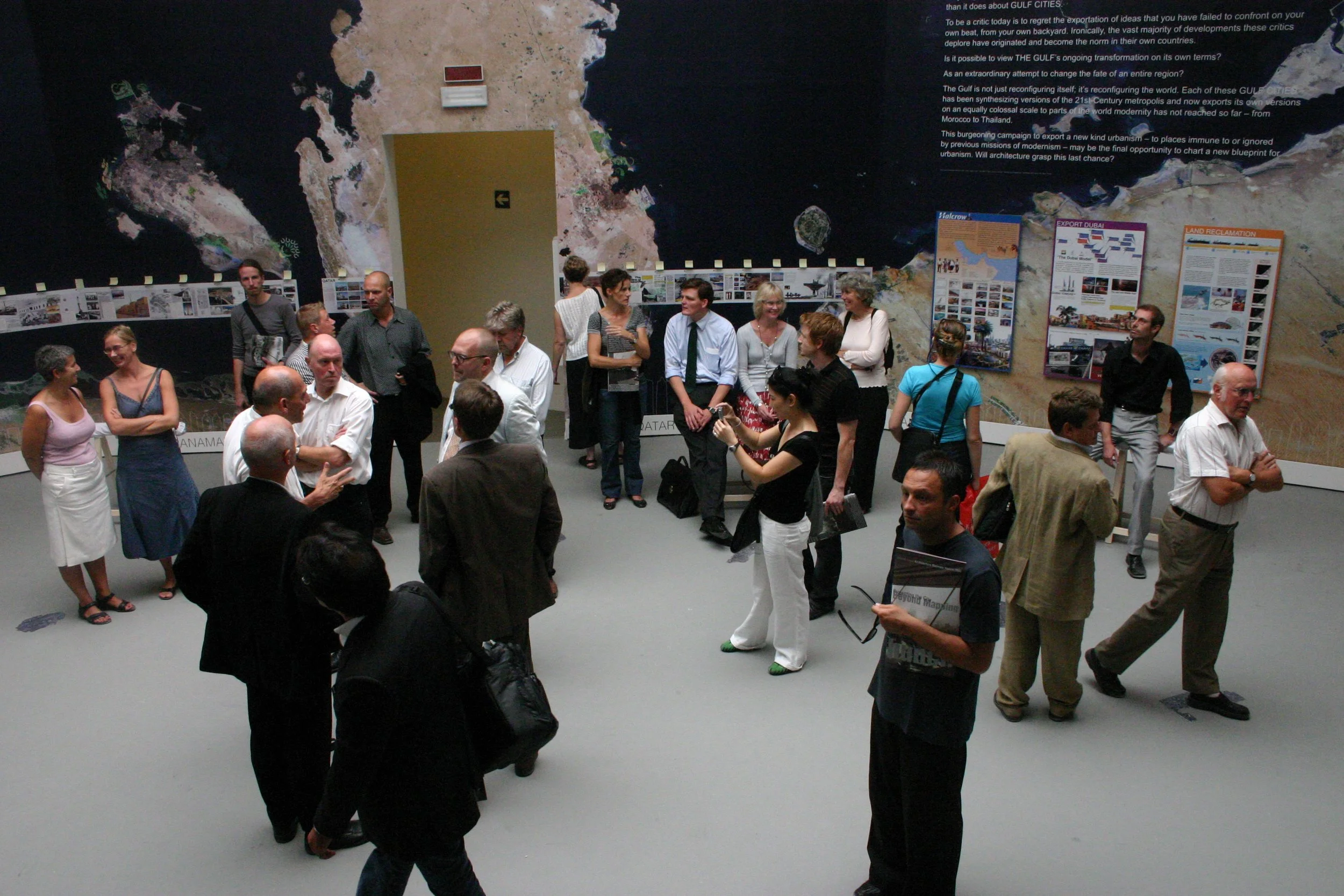
The Gulf at Venice Architecture Biennale, 2006.
Our final speaker is Rem Koolhaas, architect and co-founder of the firm OMA. “Dubai is the prototype that won’t be repeated,” Koolhaas wrote in 2010, a statement that unsettles any framing of the past or future. It was through his curiosity about Gulf cities, that I first came to the Gulf. Under his direction, OMA’s research on the region was first presented as a panoramic exhibition, The Gulf, at the Venice Architecture Bienniale in 2006—maybe the first time Gulf cities were conceptualized as a continuous, urbanizing coastline. Two publications followed: Al Manakh and Al Manakh 2: Gulf Continued, in 2007 and 2010. Architect Tala Gharagozlou will join him in conversation to reassess these publications in light of more recent work. How has working in the Gulf changed his approach to practice? How has his working definition of urban change changed?
Amid these long-arc approaches to work, artist and film curator Hind Mezaina returns this year for our annual short film program titled “Constant Adjustment.” Short films about the long view. The lineup reveals Hind’s steadfast commitment to responding to Night School’s theme, always in surprising ways. Each short film, from its own universe, presents us with people struggling to keep long-held hopes despite deep-seated frustrations.
Click here for more information about these events, including registration, in January and early February.